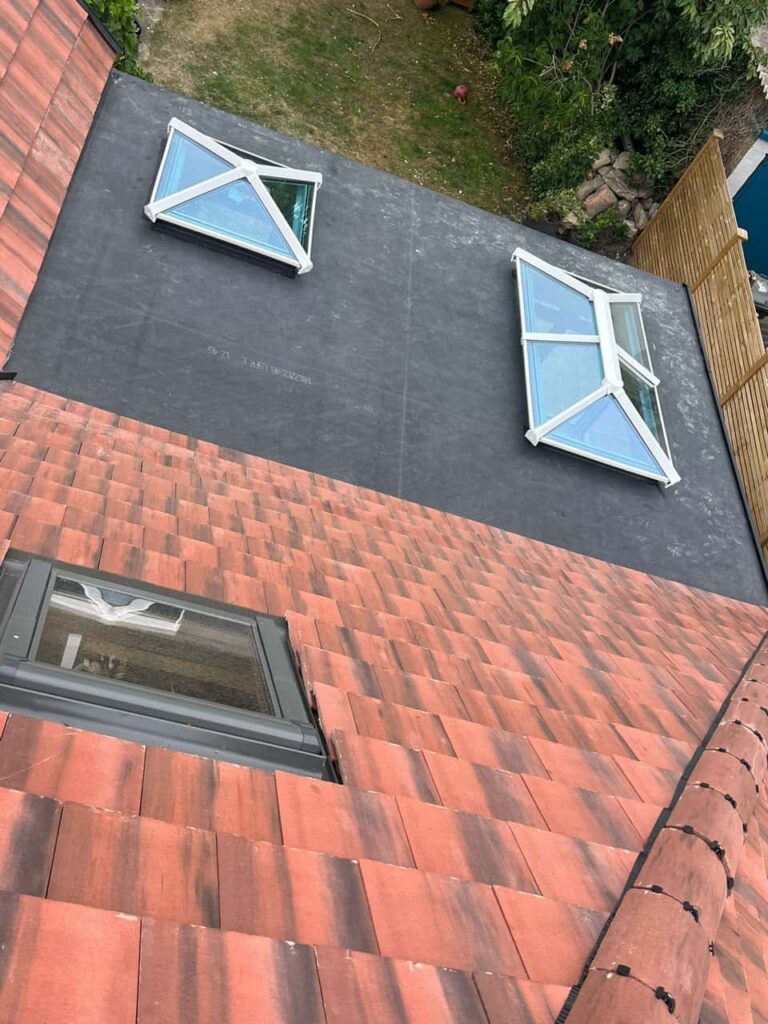
A roof repair should address more than the most obvious symptom. When the same leak, slipped tiles or damp patch keeps returning, repeatedly carrying out similar repairs can indicate that the underlying cause has not yet been fully identified.
Roofing systems contain interconnected components. Tiles or slates provide the visible covering, but their performance also depends on fixings, battens, underlay, flashing, valleys, ridges and other details. Water can also travel beneath the covering before becoming visible inside the property, which means the location of an internal leak does not always reveal where the problem began.
For homeowners in Eastwood, Nottingham, avoiding repeated roofing repairs starts with accurate diagnosis. The objective should be to understand why the defect developed, assess the relevant surrounding roof and then carry out work appropriate to the actual condition found.
How Do You Stop the Same Roof Problem From Returning?
The most effective approach is to investigate the cause rather than repeatedly treating the visible result.
This can involve considering:
- Where water is actually entering the roof
- Whether surrounding tiles or slates remain secure
- The condition of flashing and roof junctions
- Whether valleys are functioning correctly
- The condition of relevant fixings and battens
- Whether underlay has deteriorated
- Signs of movement around the affected section
- Whether several defects are contributing to one leak
- Previous repairs in the same area
- Whether deterioration extends beyond the obvious damage
Not every recurring problem indicates widespread roof deterioration. Sometimes one difficult-to-identify local defect is responsible. The important point is to establish which situation applies before another repair is undertaken.
Find the Original Cause of the Leak
Water ingress is one of the clearest examples of why accurate diagnosis matters.
A damp patch on a ceiling shows where water has eventually become visible, not necessarily where it entered the roofing system. Once beneath the covering, moisture can travel along underlay, timbers and other surfaces.
Repairing the roof immediately above an internal stain can therefore miss the true entry point.
A professional inspection considers the likely route of the water and examines relevant areas above and around the visible symptom. Finding the original weakness provides a much better basis for an effective repair.
Look Beyond the Most Obvious Damaged Tile
A cracked or displaced tile may appear to provide a simple explanation for water ingress.
Sometimes it does.
However, the surrounding area should still be considered where the problem has occurred repeatedly. Another tile may be damaged nearby, the fixing may have deteriorated, or the supporting components beneath the covering may require attention.
Replacing one tile without understanding why materials are repeatedly becoming loose can lead to the same problem appearing again.
The repair should respond to the mechanism causing the failure, not simply whichever component currently looks damaged.
Repeatedly Slipping Tiles Need Investigation
If the same tile or several tiles within one section repeatedly move, repositioning them each time may not resolve the underlying issue.
The problem may involve the way the roofing materials are secured or the condition of the support beneath them.
This is particularly important where movement is occurring across a larger section rather than one isolated tile.
Examining the surrounding roof allows the cause of repeated movement to be identified and helps determine the appropriate scope of repair.
Check the Condition Beneath the Roof Covering
Some important roofing components cannot be properly assessed from the outside alone.
Battens and underlay sit beneath tiles or slates and can be affected by deterioration or prolonged water ingress. If these components have become compromised, repairing only the visible covering may leave the underlying weakness untouched.
This does not mean that every leak requires large areas of roofing to be disturbed.
It means that where symptoms keep returning, the possibility of concealed deterioration should form part of the investigation.
Pay Attention to Flashing and Junctions
Roof junctions are common areas where careful weatherproofing is essential.
Flashing around adjoining surfaces can deteriorate or become defective, allowing water to penetrate even when nearby tiles appear sound.
A small visible repair may not resolve the issue if another section of the junction remains vulnerable.
Where leaks repeatedly occur around the same part of a roof, the complete relevant detail should be examined rather than concentrating only on the most obvious gap or damaged section.
Roof Valleys Can Produce Misleading Leaks
Valleys carry rainwater from adjoining roof slopes and therefore handle significant amounts of water during wet weather.
A defect within a valley can allow moisture to reach surrounding areas, and the eventual internal dampness may appear some distance from the original weakness.
If a previous repair has not resolved a valley-related leak, the wider valley and adjoining roof coverings may need assessment.
The objective is to establish whether the previous defect has returned or whether another part of the same roofing detail is responsible.
Consider Whether There Is More Than One Defect
A recurring roofing problem is not always caused by one persistent fault.
Two or more defects can sometimes produce very similar symptoms. Repairing the first may improve the situation without eliminating water ingress completely because another entry point remains.
This can explain why a leak appears to have been solved and then becomes noticeable again during different weather conditions.
A wider assessment can help identify whether several small weaknesses are contributing to what appears internally to be one problem.
Previous Repairs Can Provide Useful Clues
The history of a roofing problem can help with diagnosis.
If the same area has been repaired several times, it is useful to understand what work has previously been completed and whether the location of the problem has changed.
A repair that remains sound should not automatically be disturbed simply because another leak has appeared nearby.
Instead, the existing work and surrounding materials can be assessed together to determine whether the original problem has returned or a different weakness has developed.
Do Not Assume Every Recurring Leak Needs a New Roof
Repeated water ingress can be frustrating, but it does not automatically mean that complete roof replacement is necessary.
A persistent problem may still originate from one localised detail that has not yet been correctly identified.
If the surrounding roof remains serviceable, a properly diagnosed targeted repair may provide the appropriate solution.
The decision should be based on the extent of deterioration rather than the number of times a symptom has been noticed.
Recognise When the Problem Has Become Wider
There is an important difference between repeatedly repairing one difficult local defect and continually dealing with new failures across an ageing roof.
If tiles are slipping in several locations, different leaks keep developing, flashing is deteriorating and underlying materials are also affected, the roof may need to be considered more broadly.
At this stage, individual repairs may still be technically possible, but the important question is whether they remain the most appropriate way to manage the roof.
A professional assessment can determine whether the defects are genuinely connected and how extensive the deterioration has become.
Surrounding Roofing Must Be Suitable for Repair
A local repair depends partly on the condition of the materials around it.
New work needs to integrate with existing roofing that remains sufficiently sound and stable. If neighbouring materials are fragile or deteriorated, repeatedly repairing individual sections can become increasingly difficult.
This is why the condition surrounding the defect matters.
A repair should not simply focus on replacing the failed component. It should also establish whether the neighbouring roof provides a dependable basis for the work.
Weather Conditions Can Help Reveal the Cause
The circumstances in which a leak appears can sometimes provide useful information.
A problem that develops only during particular combinations of wind and rain may behave differently from water ingress that occurs whenever rainfall is prolonged.
These patterns can help identify which roof details require closer attention.
They do not replace physical inspection, but providing a roofer with information about when and where the problem appears can assist the diagnostic process.
Avoid Treating Internal Damage as the Roofing Repair
Internal staining or dampness is evidence that moisture has entered the property, but dealing with the visible internal symptom does not prevent further water ingress.
The roofing defect itself needs to be identified and addressed.
The internal location can provide clues about the route water has taken, but the investigation should continue back towards the external entry point.
This distinction is fundamental to preventing the same problem from repeatedly returning.
Accurate Diagnosis Can Keep Repairs Proportionate
Investigating a recurring defect does not mean assuming that extensive roofing work will be necessary.
In fact, proper diagnosis can help keep work focused.
If assessment confirms that one small component is responsible and the surrounding roof remains sound, attention can be directed specifically towards that area.
Conversely, if deterioration extends further than initially visible, identifying it before repairing the surface avoids repeatedly returning to interconnected problems.
The aim is to carry out the amount of work the roof genuinely requires.
Know When a Wider Roof Assessment Is Appropriate
A wider assessment becomes particularly useful when the roofing problem has developed a pattern.
This may include repeated leaks, several previous repairs, multiple displaced tiles or problems appearing in neighbouring sections.
Rather than treating every occurrence as an entirely new event, considering them together can reveal whether they share an underlying cause.
This provides a clearer understanding of the roof’s condition and makes it easier to determine whether another local repair or a broader approach is appropriate.
Good Roofing Repairs Address Cause and Consequence
The visible defect and its underlying cause are not always the same thing.
A displaced tile is a consequence if deteriorated support allowed it to move. A ceiling stain is a consequence if defective flashing allowed water into the roof. Repeated surface repairs are unlikely to provide dependable results if the original weakness remains.
Effective roofing work therefore begins by understanding this relationship.
Once the cause has been established, the repair can address the relevant components rather than simply disguising the latest symptom.
Why Professional Roof Assessment Matters
Recurring roofing problems can become difficult to diagnose because previous repairs, hidden components and the movement of water all affect what is visible.
At Eastwood Roofing Repairs, we focus on establishing why a roofing problem is occurring and assessing the relevant surrounding area before determining the appropriate repair. The intention is to distinguish between a genuinely isolated defect and a symptom of wider deterioration.
For homeowners in Eastwood, Nottingham, this approach can help avoid a cycle of repeatedly attending to the same visible problem without addressing what is causing it.
Conclusion
The best way to avoid repeatedly repairing the same roofing problem is to identify and address its underlying cause. Recurring leaks, slipping tiles and repeated deterioration can sometimes result from hidden weaknesses, defective junctions, deteriorated supporting materials or more than one problem affecting the same area.
A wider inspection does not automatically mean more extensive work. It may confirm that the issue is localised and suitable for a targeted repair. The important point is that the repair is based on an accurate understanding of the roof rather than the most obvious symptom alone.
If the same roofing problem keeps returning at your property in Eastwood, Nottingham, contact Eastwood Roofing Repairs. We can assess the affected area and relevant surrounding roof components to determine an appropriate repair based on the condition found.
Call us on: 01773 300 896
Click here to find out more about Eastwood Roofing Repairs
Click here to complete our contact form and see how we can help with your roofing needs.