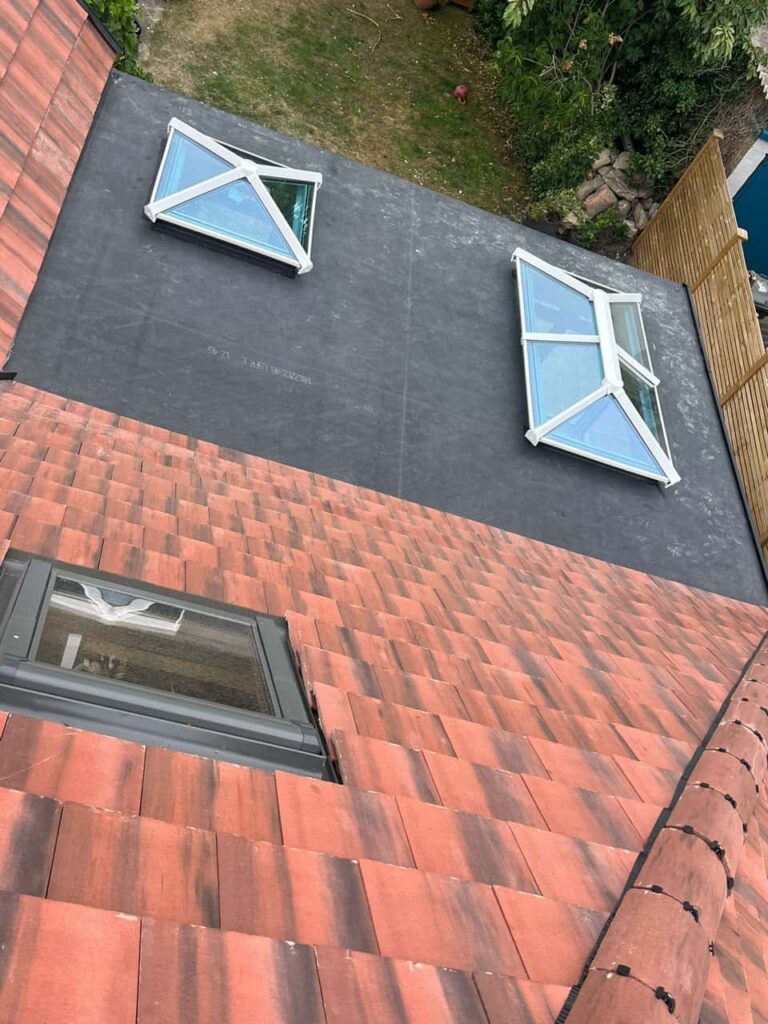
When discussing roofing styles, the terms pitched roof and gable roof are often used interchangeably. However, while closely related, they are not the same thing. Understanding the difference between pitched and gable roofs can help homeowners in Eastwood make more informed decisions when it comes to roof repairs, maintenance, or future replacement work.
At Eastwood Roofing Repairs, roof inspections frequently involve explaining how roof structure and design influence performance, durability, and long-term maintenance needs.
What Is a Pitched Roof?
A pitched roof is a broad term used to describe any roof that slopes downwards from a central point or ridge. The defining feature is the angle, or pitch, which allows rainwater to run off efficiently rather than collecting on the surface.
Pitched roofs are common across Eastwood because they perform well in varied weather conditions and support effective drainage. This general category includes several roof styles, such as gable, hip, and mono-pitched roofs.
What Is a Gable Roof?
A gable roof is a specific type of pitched roof. It features two sloping sides that meet at a central ridge, with vertical triangular walls (known as gables) at each end of the building.
The gable ends create a clear roof shape and provide strong water run-off. This design is widely used on residential properties and is often recognised by its classic triangular profile.
Key Structural Differences
While all gable roofs are pitched roofs, not all pitched roofs are gable roofs. The difference lies in how the roof terminates at the ends of the building.
A gable roof has vertical end walls beneath the roof slopes, whereas other pitched roof designs may slope on all sides or only in one direction. This structural distinction affects how wind loads are distributed and how the roof interacts with surrounding walls.
Drainage and Weather Performance
Both pitched and gable roofs offer effective drainage due to their sloping design. Water is naturally directed away from the roof surface, reducing the risk of pooling and moisture ingress.
Gable roofs, in particular, provide excellent water run-off thanks to their symmetrical slopes. However, the vertical gable ends can be more exposed to wind-driven rain if not properly maintained, making regular inspections important.
Maintenance and Repair Considerations
From a maintenance perspective, pitched roofs generally allow easier identification of issues such as slipped tiles or ridge problems. Gable roofs may require additional attention at the gable ends, where flashing and brickwork interfaces must remain secure.
Understanding the roof type helps ensure repairs are targeted correctly and that vulnerable areas receive appropriate attention during maintenance work.
Internal Space and Roof Shape
Roof shape also influences the internal structure of a property. Gable roofs often create a more defined loft space due to their symmetrical design.
This can affect ventilation, insulation layout, and access, all of which play a role in long-term roof performance and internal comfort.
Why Roof Type Matters for Repairs
Knowing whether a roof is pitched in general or specifically gabled helps roofers assess load distribution, drainage routes, and potential weak points.
Eastwood Roofing Repairs takes roof design into account when carrying out inspections and repairs, ensuring work is suited to the structure rather than applying a one-size-fits-all approach.
Conclusion
The key difference between pitched and gable roofs lies in their design. A pitched roof refers to any sloping roof, while a gable roof is a specific pitched style with two slopes and vertical end walls. Each offers effective drainage and long-term reliability when properly maintained, but they present different structural and maintenance considerations.
For homeowners in Eastwood, Nottingham, understanding roof type helps support better decisions about repairs and ongoing care. If you are unsure about your roof’s design or have concerns about its condition, Eastwood Roofing Repairs can provide professional assessment and dependable roofing solutions tailored to your property.
Call us on: 01773 300 896
Click here to find out more about Eastwood Roofing Repairs
Click here to complete our contact form and see how we can help with your roofing needs.