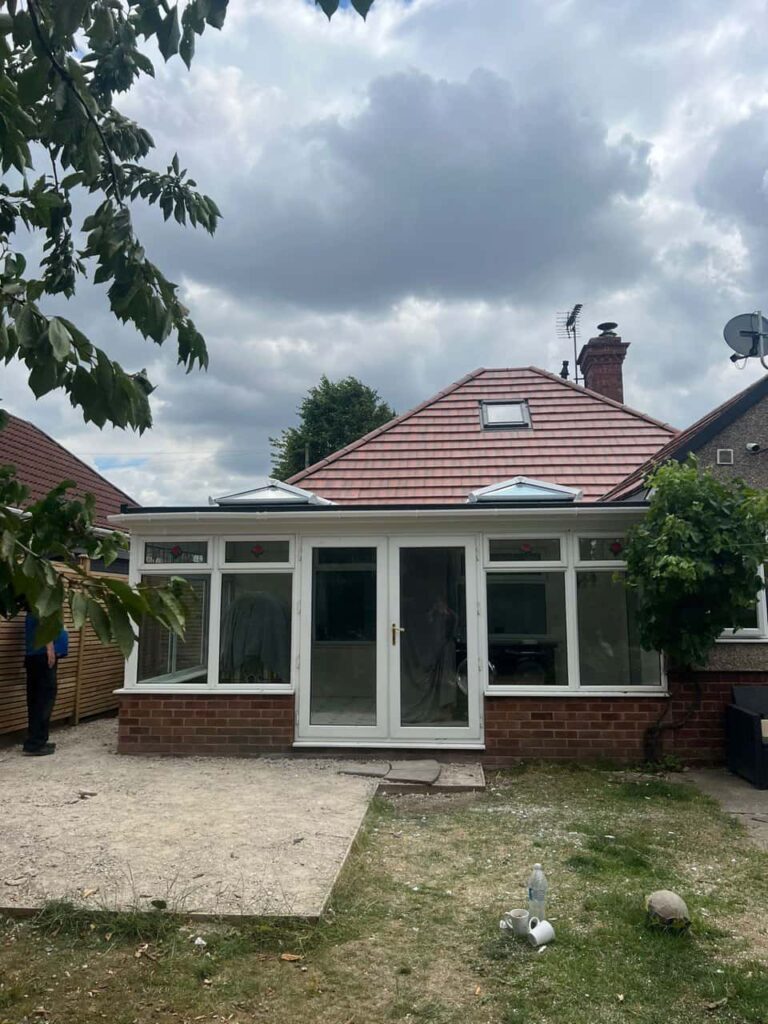
A roof tile does not need to be visibly cracked or broken to move out of position. Tiles depend on their nibs, nails, clips and supporting battens to remain correctly aligned. If any of these concealed components deteriorate, an otherwise intact tile can begin to slip.
Even a small amount of movement can create a gap in the roof covering, leaving the underlay more exposed to rain and wind. Understanding why this happens helps explain why simply pushing the tile back into place may not provide a lasting repair.
What Causes an Undamaged Roof Tile to Slip?
The visible tile is only one part of the roof system. Its stability also depends on secure fixings, sound battens, correct installation and support from neighbouring tiles. A professional inspection can identify which element has failed and determine the appropriate repair.
The Tile Nib May Have Failed
Many roof tiles have projecting nibs on their underside that hook over the battens. These nibs are hidden once the roof is laid, so damage may not be visible from outside.
A tile can remain intact across its main surface while one or more nibs have cracked or broken away. Without secure support, the tile may gradually move down the roof slope.
Nails and Clips Can Deteriorate
Tiles may be secured with nails, clips or a combination of fixings. These components can loosen, corrode or fail over time, particularly after prolonged exposure to moisture and changing weather conditions.
Once a fixing no longer holds the tile securely, wind and gravity can cause movement. Replacing the tile alone will not solve the problem if the fixing method is not also restored.
Supporting Battens May Be Damaged
Roof battens provide the horizontal support to which tiles are attached. If a batten splits, decays or becomes weakened by moisture, it may no longer hold nails and clips securely.
Batten damage is concealed beneath the roof covering and may only become apparent when nearby tiles are lifted. Localised repair may be possible when the deterioration is confined to a limited section.
Wind Can Lift Tiles Without Breaking Them
Wind pressure can enter beneath the edge of a tile and lift it slightly. The tile may settle back without cracking, but its fixing or nib can be weakened during the movement.
Repeated wind exposure may gradually work a loose tile further out of position. Roof edges, ridges, verges and other exposed sections can be particularly vulnerable because wind pressure is often greater around these details.
Movement Elsewhere Can Affect the Tile
Tiles are arranged as an overlapping system. If one tile moves, it may reduce the support provided to neighbouring tiles or alter their alignment.
A slipped tile can therefore be part of a wider section of disturbed roofing rather than an isolated defect. Checking the surrounding area helps identify loose tiles before they also move far enough to create visible gaps.
Earlier Installation May Be Inadequate
A tile may slip because it was not fixed correctly when the roof was installed or during a previous repair. Possible issues include unsuitable fixings, incomplete clipping, incorrect batten spacing or a replacement tile that does not fit the surrounding covering properly.
The defect may remain unnoticed for some time before wind or normal roof movement causes the tile to shift. A lasting repair must correct the installation issue rather than merely restore the tile’s appearance.
Roof Movement Can Disturb the Covering
Roof structures naturally experience small amounts of movement as materials respond to temperature and moisture. In a sound roof, the covering is installed to accommodate ordinary changes.
More noticeable distortion, weakened battens or movement around roof junctions can disrupt tile alignment. If several tiles have slipped in the same area, the supporting structure and roofline may need closer inspection.
Mortar Failure Can Leave Tiles Unstable
Tiles around ridges, hips and verges may rely partly on mortar or a mechanical fixing system. When old mortar cracks, loosens or falls away, the tiles themselves may still look undamaged but no longer have secure support.
Replacing loose mortar superficially without assessing the tile fixings and surrounding detail may result in the problem returning. The whole affected section should be examined before repairs are completed.
Why a Slipped Tile Should Be Checked Promptly
A displaced tile can expose the underlay and create a route for wind-driven rain. Water may then travel beneath the covering before becoming visible inside the property.
Prompt attention can help prevent:
- Damage to the underlay
- Moisture reaching battens or roof timbers
- Adjacent tiles becoming loose
- Internal damp marks
- Debris entering the roof space
- A small repair developing into a wider problem
A roof does not need to be actively leaking for a slipped tile to require attention.
What a Professional Inspection Should Include
A reliable assessment should examine more than the displaced tile. The surrounding tiles, nibs, nails, clips, battens, underlay and nearby roof details may all be relevant.
The inspection should establish why the tile moved, whether concealed materials are damaged and whether adjacent tiles remain secure. This evidence allows the repair to address the cause rather than only the visible symptom.
Conclusion
Roof tiles can slip even when they look undamaged because their hidden nibs, fixings or supporting battens have failed. Wind exposure, poor installation, mortar deterioration and movement in surrounding materials can also affect their stability.
Eastwood Roofing Repairs provides professional roof inspections and tile repairs in Eastwood, Nottingham. If you have noticed a tile out of alignment, contact the team to arrange an assessment before the exposed area develops into a more extensive roofing problem.
Call us on: 01773 300 896
Click here to find out more about Eastwood Roofing Repairs
Click here to complete our contact form and see how we can help with your roofing needs.